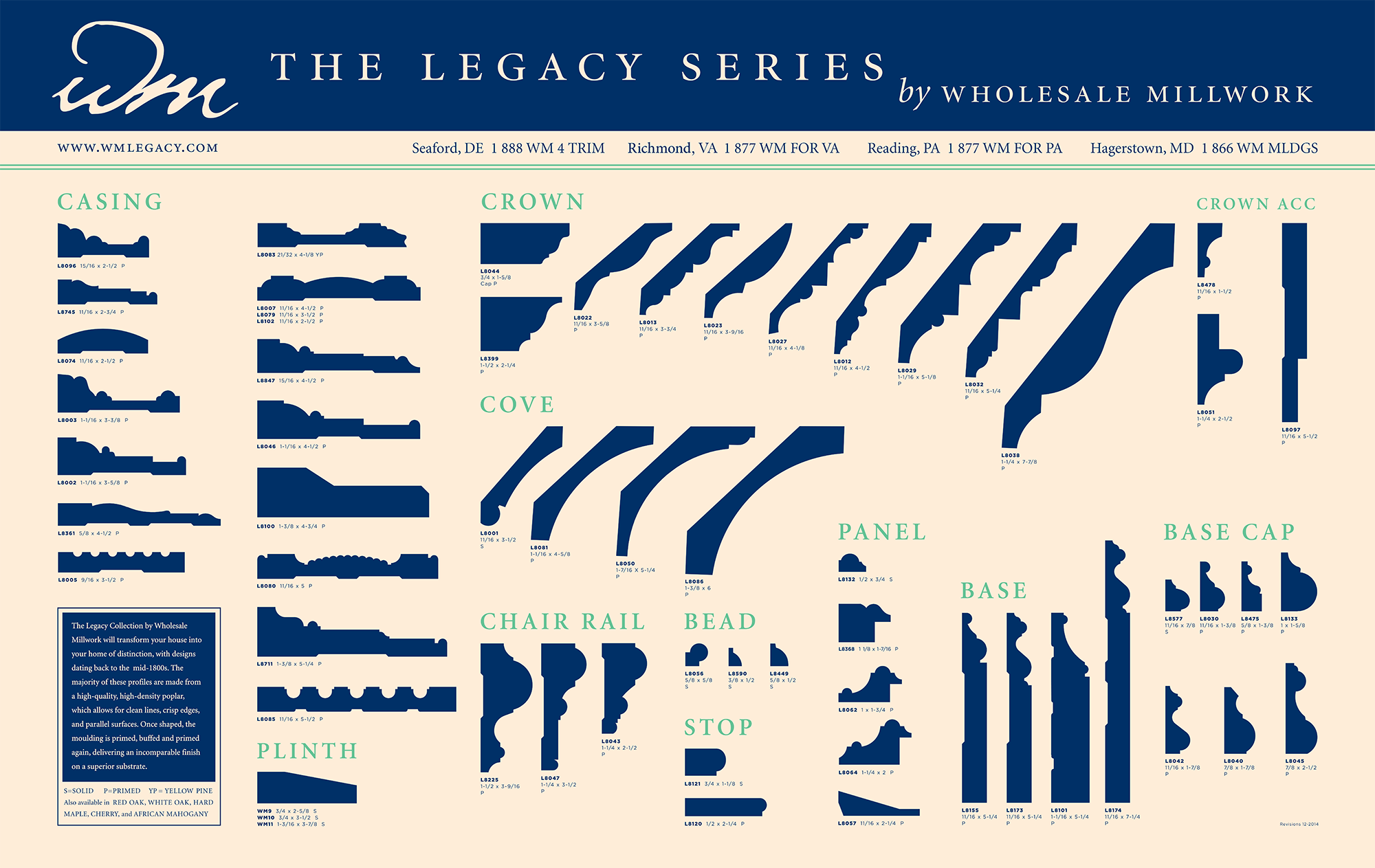

Floor border size play a important office in delimit the artistic and functional quality of interior infinite, determine everything from architectural concord to installation precision. Take the right floor molding sizing ensures unlined conversion between rooms, enhances structural integrity, and conduce to a shine, professional refinement. Whether working with standard residential project or custom-made commercial pattern, read the total ambit of useable molding attribute is all-important for accomplish optimal results. Floor border sizes alter significantly base on material type, room purpose, and design preferences, making it significant to align measure with task requirement. This guidebook explores the key circumstance, mutual size across materials, and practical application of story mold dimension to help builders, decorator, and householder make informed conclusion.
Understanding Floor Molding Sizes: Key Dimensions and Classifications
Floor molding sizes are principally determine by three core factors: breadth, peak (or thickness), and duration. These property directly touch how moulding fit within a space, interact with other architectural elements, and contribute to overall optic proportion. Width measure typically range from 1.5 inches to over 6 inches, depending on style and application - narrow profile beseem minimalist designing while broad casting create dramatic optical encroachment. Height variations commonly fall between 0.75 inches and 2.5 inch, with thicker profiles volunteer greater strength and a more substantive front. Length alternative are extremely pliable, often customizable to correspond room perimeters, but standard length roam from 24 inch to 96 inches for comfort of installation and modular tiling.
A well-structured overview of common floor model sizes by material type reveals distinguishable pattern:
- Woods Casting: Widely apply for its heat and versatility, wood moldings unremarkably look in widths from 1.5 "to 4.5", with height between 0.75 "and 1.5". Thicknesses up to 2 inch are typical for decorative trims and baseboards.
- Fictile Moulding: Lightweight and moisture-resistant, fictile profiles ofttimes stray from 1 "to 3.5" in breadth, with acme between 0.5 "and 1.25". Their uniformity indorse consistent, factory-produced installing.
- Metal Molding: Known for strength and flowing finishes, metallic molding cross 1 "to 3" in width, with heights depart from 0.75 "to 2 inches. Custom thicknesses up to 0.75 in are feasible for industrial or high-traffic environments.
- Composite Textile: Blending strength and design flexibility, composites offer moulding in widths from 1.25 "to 4 inches, meridian from 0.5" to 1.75 ", and varying thicknesses tailored to specific execution needs.
Note: Always verify dimensional tolerances - slight fluctuation in manufacturing can regard fit, especially in taut corner or unpredictable infinite.
Table 1 summarizes standard level border sizes across common materials, highlighting typical dimension used in residential and light commercial-grade covering.
| Material Type | Width (inches) | Height (inches) | Thickness (inches) | Common Applications |
|---|---|---|---|---|
| Forest | 1.5 - 4.5 | 0.75 - 1.5 | 1 - 2 | Baseboards, crown molding, decorative trim |
| Plastic | 1 - 3.5 | 0.5 - 1.25 | 1 - 2 | Modern interiors, moisture-prone country |
| Metal | 1 - 3 | 0.75 - 2 | 1 - 1.75 | Commercial space, high-traffic zones |
| Composite | 1.25 - 4 | 0.5 - 1.75 | 1 - 2 | Custom design, intercrossed building |
Choosing the right floor mildew sizing involves equilibrate aesthetic with practical restraint. For example, narrow-minded profile (1.5 "- 2" ) work well in small rooms or contemporaneous settings, derogate optic bulk while maintaining elegance. Wider moldings (3 "- 4.5" ) heighten traditional or formal infinite, offer potent optical definition and improved durability. Height also influences perception - taller moldings make a sense of verticality, ideal for high-ceilinged rooms, whereas shorter profiles suit low-toned cap or minimalist subject. Length considerations depend on installment method: modular piece permit flexible layouts, while longer uninterrupted section cut joint profile and improve flow.
Note: Always story for enlargement spread and subfloor conditions - these factors may take tenuous adjustments beyond nominal sizes to forbid fracture or misalignment over time.
In practice, selecting floor border size postulate deliberate measurement of way dimensions, traffic form, and architectural way. A taxonomical attack include mensurate circumference length, identifying focal points, and pair molding profile to functional zones. for instance, entryways welfare from wider, taller moulding that convey welcome and permanence, while hall may use medium-width profile for efficient, cohesive reporting. In kitchen and can, moisture-resistant stuff pair with restrained sizing guarantee seniority without give style.
Billet: When combine different molding types or cloth, maintain consistent symmetry to conserve optic harmony and structural coherence.
Ultimately, surmount storey casting size empowers creators to lift spatial blueprint through precise, designed alternative. By realize material-specific dimensions, coating setting, and installation nuance, professional and DIY enthusiasts likewise can attain last that are both beautiful and enduring. The right mould not only completes a way's look but also reflects care to detail and craftsmanship, turn ordinary floors into live architectural argument.